Change management is often underestimated — sometimes even skipped — while being one of the main factors of failure in a company’s strategy deployment.
We live surrounded by information, and numbers are the easiest way to understand and retain knowledge. But raw data alone is not enough: looking at business KPIs, inequality indexes, or biodiversity loss reports rarely triggers action.
Now imagine a ghostly forest visualization with disappearing trees and animals, or an animated inequality chart displayed in the office showing the consequences of inaction. Such data design generates feelings, and those feelings are the beginning of change.
This is the role of data art in business transformation: bringing aesthetics to numbers in order to generate emotions. It mixes art and data to create factual and emotional stories that drive visibility, engagement, and new narratives.
What Is Data Art?
Data art is more than a beautiful graph. It is artistic data visualization enhanced by data design and storytelling principles.
While data visualization provides information, data art engages people by provoking reflection, feelings, and dialogue.
For a detailed definition, you can read my first article on data art.
Examples of data artists: Giorgia Lupi, Federica Fragapane, and others have pioneered ways to transform data into emotional, memorable experiences.
How Data Art in business transformation Supports change
Visibility
Most dashboards are duplicated, crowded with standard KPIs, and rarely highlight the “invisible” but high-impact factors. Data art makes hidden phenomena tangible, helping people see beyond the obvious and understand what truly needs attention.
Engagement
Numbers get lost in the noise of reports, dashboards, and studies. A KPI often erases the previous one. By turning KPIs into aesthetic and engaging experiences, data art makes information last, and durable information has more chances to inspire action.
New Narratives
Traditional communication of change relied on numbers and facts, often failing to create engagement. Today, images, videos, and music generate emotions — but they can also oversimplify. Data art bridges facts and emotions, telling complex stories without reducing nuance, and helping people form their own judgments.
Benefits of Data Art for Different Audiences
Data Art in Business Transformation
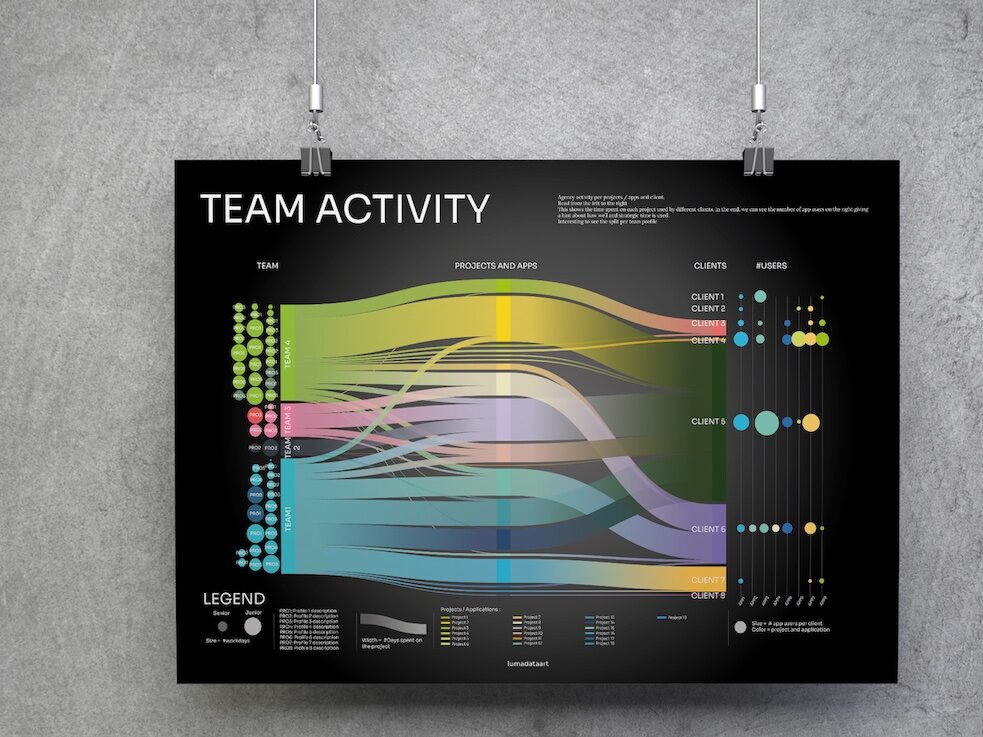
Data art raises awareness, clarifies complex decisions, and supports transformation. Leaders’ decisions often fail due to misunderstanding; data art helps employees grasp the “why”, boosting engagement and performance.
Data Art in Society
From climate change to inequality, society faces complex challenges. Data art helps make these phenomena comprehensible in a fair and neutral way, countering misinformation and building collective understanding.
Data Art in Education
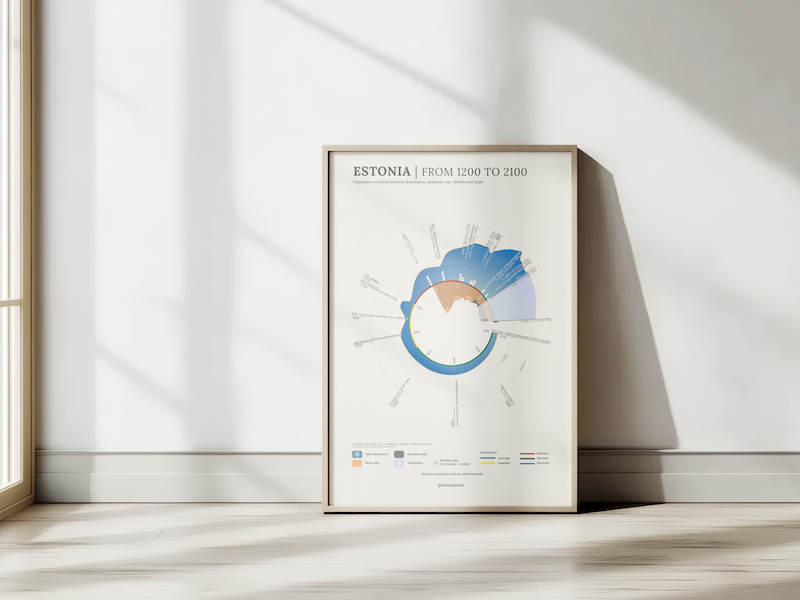
Learning is a long term and necessary challenge. Data art complements traditional methods by explaining complex concepts visually and emotionally, improving retention and long-term understanding.
Data Art in Art
Contemporary art is sometimes seen as too abstract. Data art uses concrete material (data) to connect with audiences, making art more accessible while still inspiring.
Case in point: Data artist Giorgia Lupi collaborated with a fashion retailer to create a data-driven storytelling project blending business, society, education, and art.
How to Start a Data Art Project
Data art is sometimes mistaken for “decorated dashboards.” It is not about adding make-up to a graph, but about facilitating comprehension.
Steps to integrate data art into your activity:
- Identify issues → list problems, evaluate complexity, data accessibility, and potential impact.
- Choose the right use case → start small with an easy-to-build but high-impact project.
- Work with solid data → ensure quality, analyze big trends, and select the most relevant graphs.
- Apply design and storytelling → transform your data into a narrative that mixes fact and emotion.
Conclusion: Data Art in business transformation to Inspire Change
In a world overwhelmed with information, disinformation, and constant learning needs, data art creates visibility, engagement, and meaningful narratives.
It benefits business (by facilitating transformation), society (by clarifying challenges), education (by improving comprehension), and art (by making it more accessible).
Start small, but with impact. Data art can be the spark that drives real change.
Want to learn how to make your first data art project? Feel free to contact me.
Pingback: Enterprise software adoption with data art - Data art - aestheticized data visualization to understand faster