About me
The journey behind Luma Data Art
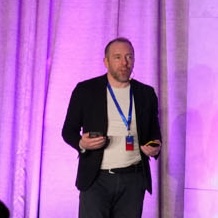
Arnaud Richter, data artist
Location:
Paris, France
Email:
lumadataart@gmail.com
Follow my work:
I started with numbers. I stayed for what they can become.
My background is scientific, but aesthetics was always there. In the margins, in the way I arranged information, in the questions I kept asking about why some data landed and most didn’t. That tension between logic and image is where Luma Data Art was born.
I spent eight years in a media agency working with data and analytics. It’s where I first understood that clarity isn’t just a technical problem but a perceptual one. How data is shaped determines what people do with it. Garr Reynolds put words to something I was already feeling: simplicity and emotional impact aren’t in opposition to rigour. They’re what makes rigour useful.
Six years in a global premium automotive company followed, working across digital roles : strategy, performance, cross-functional decision-making. Data at scale, with real stakes.
Today I’m Chief Digital Officer at a mid-sized company. I run the full data ecosystem: infrastructure, governance, visualization, AI. And in parallel, I make data art.
Not as a hobby but as a conviction.
What i believe
- Data alone does not create understanding and adoption
- Insight comes from how data is shaped and perceived
- Aesthetics can accelerate clarity and decision-making
What i do
I transform data into visual experiences that help people understand faster, see differently and make better decisions.
This work reflects personal explorations, occasionally informed by broader professional contexts.
You can explore my creations in my portfolio.
Why LUMA DATA ART?
LUMA stands for Learn, Understand, Make, Awaken.It’s a process of transformation. The name also echoes Lumen, Latin for light. My work aims to bring light to raw, often cold data, revealing its meaning, emotion, and power.
The logo story
The logo folds a fox head into a Voronoi diagram. I grew up near a forest. Autumn specifically — the colours, the rhythms, the way the light changed everything. The fox is how I think about working with data: observe, go deep, connect things that don’t obviously belong together, and see what surfaces.